The Museum Is Open Today 10 Am - 5 Pm
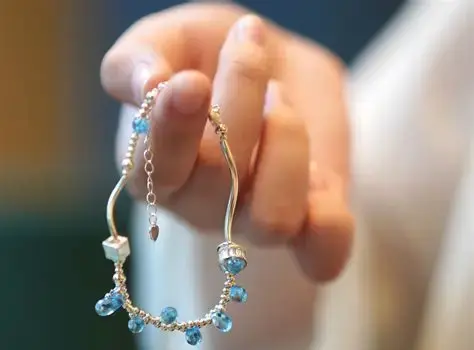
You’re standing by the pool, bracelet on your wrist, and someone yells “cannonball!” You have about two seconds to decide — take it off or jump in. Most of us have been there.
Quick Answers: When Your Bracelet Needs a Break
 Can I shower with my gemstone bracelet?
 Can I shower with my gemstone bracelet?
Better not. Soap, shampoo, and hot water weaken the elastic cord over time. A quick accidental rinse won’t ruin anything — but making it a daily habit will cut your bracelet’s lifespan in half.
Should I sleep with my bracelet on?
It depends on the bracelet. Lightweight beaded styles with smooth stones? Go ahead. But if yours has metal charms, sharp crystal points, or a clasp — take it off. Your sheets and your skin will both be happier.
What about swimming — pool or ocean?
Take it off, no question. Chlorine eats through elastic cord faster than anything else. Salt water leaves residue in every crevice and dulls porous stones permanently. Your bracelet deals with enough without fighting a swimming pool.
The One Thing That Kills Bracelets Faster Than Anything Else
It’s not dropping them. It’s not losing a bead. It’s water damage — the slow, invisible kind that weakens the elastic cord strand by strand until one day, without warning, it snaps.
Most gemstone bracelets are strung on elastic cord. That cord is strong — but it’s not invincible. Water, soap, chlorine, and salt all attack it differently. The damage compounds over weeks and months, and you won’t see it coming.
Think of it like a rubber band left in the sun. Nothing happens on day one. But leave it there long enough, and one gentle stretch is all it takes. The cord doesn’t snap when it’s wet — it snaps days or weeks later, when you’re reaching for something across a table and suddenly beads are everywhere.
What makes this especially tricky is that the outside of the cord looks fine right up until it fails. The weakening happens from the inside out, where water and residue have been quietly working through the fibers. By the time you notice fraying, the cord was already compromised long ago.
Shower, Pool, Ocean — A Practical Breakdown
 Here’s what actually happens when your bracelet meets different kinds of water:
- Shower water + soap — Hot water and detergents degrade elastic fibers. A splash here and there? Fine. Daily exposure? You’ll be restringing within 6 months. The hotter the water, the faster the breakdown — those long, steamy showers are doing more damage than you’d think.
- Chlorinated pool water — The worst of the bunch. Chlorine is designed to break down organic material, and elastic cord is exactly that. Even one pool session noticeably weakens the stretch. Two or three sessions, and you’re on borrowed time.
- Salt water / ocean — Salt crystals form inside bead holes and against the cord, creating micro-abrasion with every movement. On porous stones like turquoise or howlite, salt residue can permanently dull the color. The drying effect of salt also makes the cord brittle — it loses elasticity and becomes prone to snapping under tension.
- Fresh water (lakes, rivers) — The mildest option, but still not ideal. Natural minerals and silt work into tiny spaces between beads. If you do take an unplanned dip, rinse the bracelet with clean water afterward and let it air-dry completely before wearing again.
Sleeping with Your Bracelet: Yes or No?
This one splits the room. Some people never take their bracelets off — not for sleep, not for anything. Others keep a little dish on the nightstand and remove everything before bed. Neither group is wrong.
Here’s the honest answer: it depends entirely on the bracelet.
A lightweight beaded bracelet with smooth, rounded stones and no metal components? Sleep with it. The elastic won’t mind, and nothing will catch on fabric or dig into your skin. Many people find the gentle weight of the beads against their wrist actually helps them feel grounded at night.
But if your bracelet has metal charms, sharp crystal points, or a clasp — take it off. Charms catch on pillowcases and bend. Raw crystal edges can scratch you (or the person next to you). And clasps concentrate pressure on the cord in a way continuous beaded bracelets don’t — that single point of tension, repeated night after night, is where cords most often fail.
One more thing: if you move a lot in your sleep, err on the side of caution. The repetitive friction of beads against sheets and skin adds up over weeks and months. You might not notice the wear, but the cord certainly does.
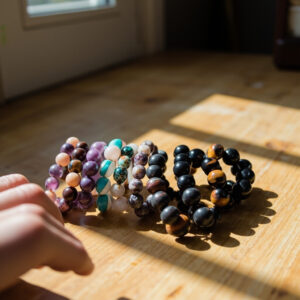
Sweat, Sunscreen, and Everything Else on Your Skin
Your bracelet doesn’t just deal with water — it deals with whatever is on your skin at any given moment. And your skin carries more than you think.
- Sweat — Salt and oils from sweat settle into the cord and between beads. After a workout, wipe your bracelet with a dry cloth. It takes five seconds and makes a measurable difference. Skip this step regularly, and the accumulated residue turns into a gritty paste that slowly saws through the cord from the inside. Not dramatic — just physics.
- Sunscreen and lotion — These create a film that attracts dust and grime like a magnet. On porous stones like turquoise or malachite, lotions can actually soak into the stone itself, slowly shifting its color in ways you can’t reverse. Apply your lotion, let it absorb for a minute, then put your bracelet on. The order matters.
- Perfume and essential oils — Spray first, bracelet second. Alcohol-based products dull polished stone surfaces and weaken any thread or cord they touch. Essential oils are especially penetrating — a single drop of undiluted oil on a porous bead can leave a permanent dark spot.
Stone-by-Stone: Which Bracelets Need Extra Care
Not all gemstones handle water the same way. Some are practically waterproof. Others will punish you for a single mistake. Here’s a quick field guide to know which is which:
- Porous stones (high risk) — Turquoise, howlite, malachite, lapis lazuli, opal. These absorb water like a sponge and can crack internally as they expand and contract. A single dip in chlorinated water can permanently alter their color. If your bracelet contains any of these, treat it like it’s made of sugar in the rain.
- Moderate porosity (medium risk) — Tiger eye, jade, amethyst, rose quartz, citrine. They can handle a splash. But soaking — whether in a pool, the ocean, or a hot bath — is still off the table. Wipe dry after any contact with water and they’ll stay beautiful for years.
- Low porosity (low risk) — Black agate, onyx, obsidian, clear quartz. Dense, non-absorbent, and tough. These are the workhorses of any collection. They can take a beating — but remember, the elastic cord holding them together still can’t.
The rule of thumb: if you’re not sure what stone you’re dealing with, take the bracelet off. Better to be cautious than to watch a favorite piece fall apart because you assumed it could handle one more shower.
The “Never Take It Off” Myth
Some traditions suggest you should never remove a protective bracelet — that taking it off breaks the energy or interrupts its purpose. You’ll hear this about red string bracelets and certain blessed amulets, and it’s a belief people hold with genuine conviction.
Here’s a practical perspective: intention lives in your mind, not in the physical object. If you take off your bracelet to shower and put it back on with the same intention, nothing is lost. The bracelet doesn’t forget you. The meaning doesn’t evaporate.
And honestly — a bracelet that snaps because you never took it off serves no one. A cared-for bracelet lasts years and carries its meaning through every one of them. A neglected one lasts months and ends up scattered under the bathroom sink. That choice is yours every single day.
Warning Signs Your Bracelet Is Wearing Out
Even with perfect care, elastic cord has a lifespan. Here’s what to watch for before the snap happens:
- The bracelet feels looser than it used to — Elastic loses tension gradually. If your bracelet slides further down your wrist than it did six months ago, the cord is stretching out. It won’t tighten back up.
- You can see gaps between beads when you stretch it — Healthy elastic pulls beads tightly together. Visible gaps under tension mean the cord has lost its snap and is running on borrowed time.
- The cord looks fuzzy or frayed anywhere — Even a tiny patch of fuzz is a red flag. The fibers are separating, and once that process starts, it accelerates quickly.
- Beads are rotating or twisting more than they used to — This usually means the cord has stretched unevenly. Some sections are tighter than others, and the beads adjust to the imbalance.
If you notice any of these, don’t panic — but do plan to have the bracelet restrung. It’s a simple fix that takes a jeweler five minutes and costs almost nothing. Way better than losing beads.
A 10-Second Routine That Actually Works
Here’s the habit that makes the biggest difference — and it takes almost no effort to build:
- Before showering, swimming, or working out — bracelet comes off.
- After applying lotion, sunscreen, or perfume — wait 60 seconds, then bracelet goes on.
- Once a week — wipe your bracelet with a soft dry cloth. That’s it.
Ten seconds of awareness saves you the hassle of collecting scattered beads from the bathroom floor. It’s not about being precious with your jewelry. It’s about being consistent enough that your bracelet sticks around for the long haul — carrying its meaning with it the whole way.
🧿 Looking for a Bracelet Built to Last?
Our Matte Black Agate Bracelet uses dense, low-porosity stone that handles daily wear beautifully — one of the toughest pieces in the collection. Browse more styles in our lucky bracelets collection →