The Museum Is Open Today 10 Am - 5 Pm
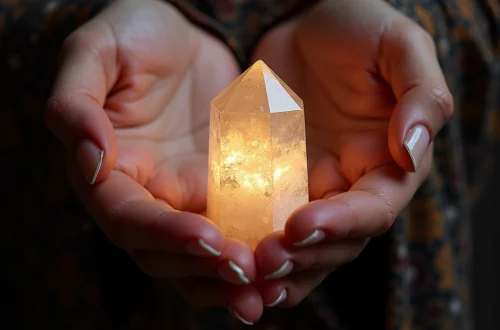
You’ve probably done it without thinking. You put on a bracelet before a big meeting, touched a pendant during a hard conversation, or held a ring between your fingers when you needed to steady yourself. Jewelry does that. It anchors us.
But there’s a difference between accidentally using your jewelry as a comfort object and intentionally charging it with purpose. The first is instinct. The second is a practice that’s been refined over thousands of years, across every major tradition on earth.
This guide is about the second one.
Quick Answers
How do I set an intention with my jewelry?
Hold your piece in both hands, close your eyes, and clearly state your intention — whether it’s protection, confidence, love, or focus. Repeat this monthly or during new moons.
Do I need to clean jewelry before setting intentions?
Yes — cleanse your piece first (moonlight, smudging, or gentle soap) to remove any previous energy. Set intentions on a cleansed stone for best results.
How often should I reset my jewelry intentions?
Monthly is ideal — align with the new moon for setting fresh intentions or the full moon for amplifying existing ones. Daily reminders by touch also strengthen the connection.
What “Setting an Intention” Actually Means
Let’s get one thing out of the way: setting an intention isn’t magic. You don’t need crystals arranged in a specific pattern, a full moon, or incense (though those can be nice). At its core, intention-setting is simply:
Choosing a focus and attaching it to a physical trigger.
That’s it. The same mechanism that makes a wedding ring meaningful, that turns a childhood blanket into a comfort object, that makes a team jersey feel lucky — it’s all the same psychological process. You’re creating an association between an object and a state of mind.
Neuroscience backs this up. It’s called classical conditioning: when you repeatedly pair a stimulus (the jewelry) with a response (the intention), the brain starts linking them automatically. Pavlov’s dogs. But for your wrist.
Why Wearable Intentions Work Better Than Journaling
Journaling is great. But it has a limitation: you can’t carry your journal into a job interview, a first date, or a panic moment on the subway.
A bracelet? You wear it everywhere.
The power of wearable intention lies in frequency of exposure. Every time you glance at your wrist — dozens or hundreds of times a day — you get a micro-dose of your intention. That tiny reminder, repeated consistently, actually reshapes neural pathways over time. Psychologists call this “attention anchoring.” It’s the same principle behind mindfulness bells, phone reminders, and the elastic band method for habit formation.
The difference between a phone reminder and a bracelet? A phone notification is external, demanding, interruptive. A bracelet is quiet. It invites rather than demands. You notice it on your own terms, which makes the association deeper.
The Seven-Step Framework
Step 1: Pick the Right Piece
Not all jewelry makes good intention anchors. The best pieces share three qualities:
Daily-wear friendly. If you only wear it for special occasions, the association never builds. Bracelets and rings work best because they’re always visible. Necklaces work if you tend to touch your chest when thinking. Earrings? Less effective — you can’t see them.
Tangible. You need to be able to feel it. A loose chain that slides around is less effective than a bracelet with beads you can turn between your fingers. The more sensory input (sight + touch), the stronger the anchor.
Meaningful to begin with. You can set an intention on any piece, but it’s easier when the jewelry already has personal significance — a gift from someone important, a stone with properties that align with your goal, a design that resonates with you.
Step 2: Get Clear on One Intention
This is where most people screw up. They set five intentions. “I want confidence, wealth, love, health, and creativity.” That’s not an intention — that’s a wish list.
A real intention is specific, singular, and time-bound.
Instead of: “I want to be more confident.”
Try: “For the next three months, I will speak up in every meeting where I have something to contribute.”
See the difference? The second one is measurable. You’ll know if you’re doing it. The first one is vague enough to let yourself off the hook.
One intention. One piece. One commitment period.
Step 3: Create a Setting Ritual (Takes 3 Minutes)
1. Wash your hands. Physical cleanliness matters psychologically. It signals a transition.
2. Hold the piece in both hands. Close your eyes. Take three deep breaths.
3. State your intention out loud. “This bracelet is my reminder to speak up when I have something to contribute.”
4. Put it on. As it touches your skin, imagine the intention settling into the material.
Total time: three minutes.
Step 4: The Micro-Habit That Changes Everything
Every time you see the bracelet, take one conscious breath and remember your intention. One breath. Three seconds.
Day 1-7: You forget constantly. You see the bracelet and remember maybe 5-10 times.
Week 2-3: The association starts forming. You catch yourself taking the breath without thinking.
Month 1-2: The intention starts showing up in your behavior before you consciously think about it.
Month 3: You realize you’ve been living the intention naturally.
Step 5: Layer With Other Practices
Morning check-in: While putting on the bracelet, spend 10 seconds visualizing your intention for the day.
Evening reflection: While taking it off, ask yourself: “Did I live my intention today?” No judgment. Just awareness.
Transition moments: Before entering a situation where your intention matters (meeting, difficult conversation), touch the bracelet and take a breath.
Step 6: Know When to Reset
You achieve the intention. The bracelet feels “tired.” Your circumstances change significantly. Every three months by default. Any of these means it’s time for a reset.
Step 7: When You Mess Up
You’ll forget to do the breath. You’ll go three days without noticing the bracelet. That’s fine. The moment you remember, you’re back in it. No guilt, no “starting again on Monday.”
Which Stones Work Best for Which Intentions
Confidence: Tiger Eye — the stone of courage. Its layered golden bands remind you to see clearly under pressure.
Calm: Blue Jade or Howlite — both encourage slow breathing. Blue Jade especially feels like standing still in a fast-moving world.
Abundance: Citrine or Pyrite — both associated with prosperity and career growth.
Self-Love: Rose Quartz — the pink stone that makes you feel held while you solve problems yourself.
Creativity: Carnelian — warm, activating energy that gets things moving when you’re stuck.
The Bottom Line
You don’t need to be spiritual to do this. You just need a piece of jewelry you’re willing to wear every day, a clear intention, and the willingness to do a three-second breath every time you notice it on your wrist. That’s the whole practice. Everything else is decoration.
✨ Discover jewelry with meaning at Blessglow
Browse our handcrafted gemstone bracelets — each piece selected for quality and meaning. Free shipping on orders over $99.