The Museum Is Open Today 10 Am - 5 Pm

A few months ago, I was at a coffee shop when I noticed the barista wearing a red string bracelet. The red was fading to pink at the edges. I asked her about it.
“My grandmother tied it on before I left for college. She said it was for protection.” She shrugged. “I’m not superstitious. But I’ve never taken it off.”
That’s the thing about the red string bracelet. It’s not a trend. It’s not a fashion statement. It’s one of the oldest continuously practiced jewelry traditions in human history, and it shows no signs of disappearing.
Quick Answers
Why is the red string bracelet still popular today?
The red string bracelet has endured for thousands of years because it's simple, meaningful, and universal — it transcends religion and culture while carrying deep protective meaning.
How long should I wear a red string bracelet?
Traditionally, you wear it until it falls off naturally. The string breaking or falling off is believed to mean it has fulfilled its protective purpose.
Can anyone wear a red string bracelet?
Absolutely — the red string is not limited to any specific culture or belief. Anyone seeking protection, luck, or a meaningful connection can wear one.
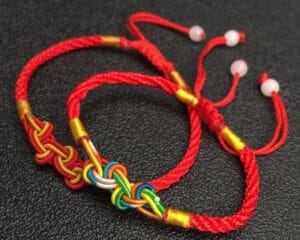
The Red Thread That Connects Everything
The red string bracelet is often described as a single tradition, but it’s actually several distinct traditions that converged on a similar practice.
Chinese Tradition: The Thread of Fate
In Chinese culture, the red string is inseparable from fate. The most famous legend tells of the Old Man Under the Moon, a divine matchmaker who ties an invisible red cord around the ankles of two people destined to be together. The cord may stretch or get buried — but it never breaks.
This isn’t limited to romantic fate. The red string also represents protection from harm, connection to ancestors, and the invisible ties that bind family across generations.
The traditional practice involves tying three knots while making three wishes. The knots represent heaven, earth, and humanity. The bracelet is worn on the left wrist — the receiving side — and it’s meant to stay on until it falls off naturally. When it falls off, it’s said to have absorbed the bad luck meant for you and done its job.
Kabbalistic Tradition: Protection From the Evil Eye
In Jewish mysticism, the red string is linked to the tomb of Rachel. The practice involves winding a red thread seven times around her tomb, then breaking it into bracelet-length pieces tied with seven knots. Each knot represents a layer of protection against harmful energy.
Unlike the Chinese tradition focused on fate and connection, the Kabbalistic red string is specifically defensive — a shield, not a magnet.
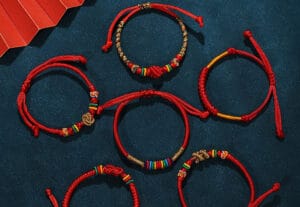
Buddhist and Hindu Traditions
In Buddhist countries like Thailand, red strings called sai sin are blessed by monks in temple ceremonies. The strings are chanted over, imbued with protective energy, and tied around the wrist as a portable blessing.
In Hindu tradition, the red string takes the form of rakhi, a sacred thread tied by a sister on her brother’s wrist during Raksha Bandhan. The ceremony symbolizes love, prayer for well-being, and a vow of protection.
The Anatomy of a Red String Bracelet
Look closely at a traditional red string bracelet: every element has meaning.
The color red. In Chinese philosophy, red is fire — the most Yang element. It represents life force, vitality, and the power to transform. Red is also the most visible color to evil spirits.
Natural fibers. Traditional bracelets use cotton or silk — natural materials that biodegrade. When the bracelet breaks and falls off, it returns to the earth without trace.
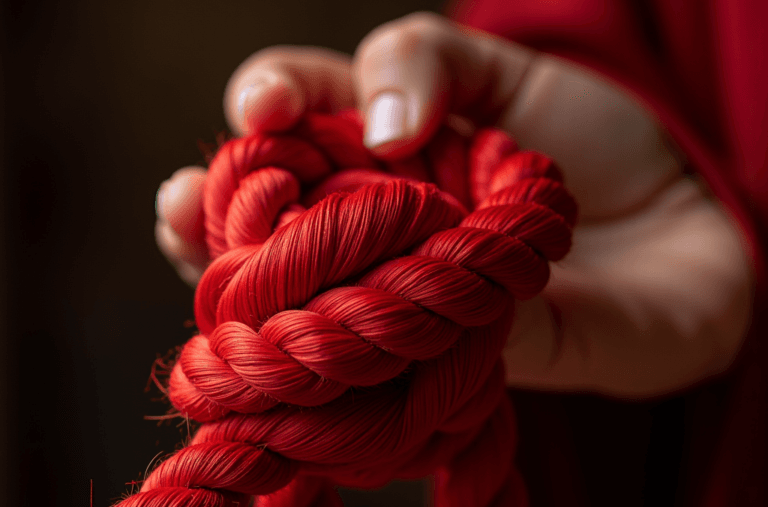
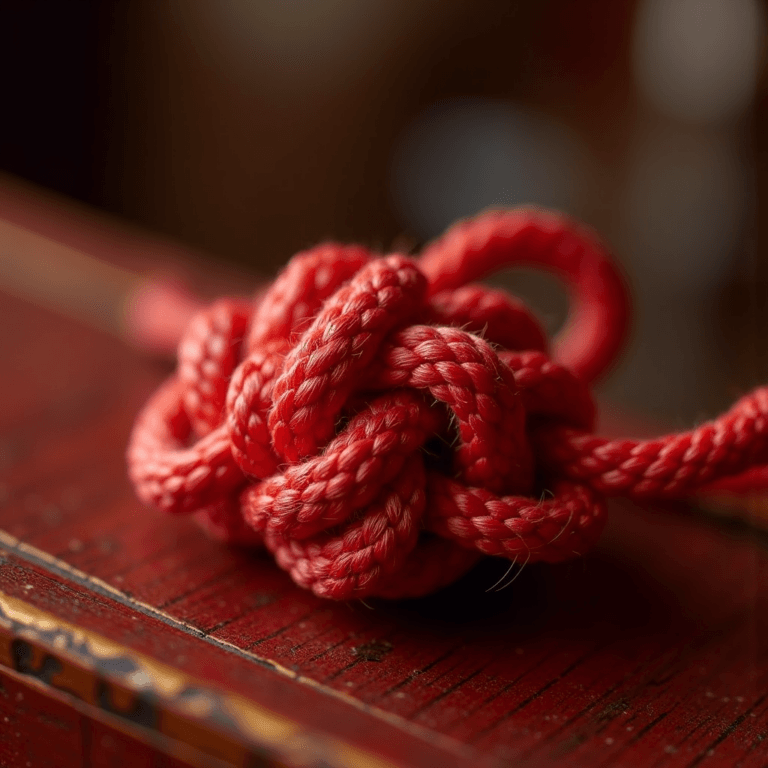
The knots. Three knots for heaven-earth-humanity. Seven knots for protection. Nine knots for completeness. Each knot is a concentrated point of intention.
The left wrist. Energy enters through the left side. Wearing the bracelet on the left means you’re open to receiving its protective qualities.
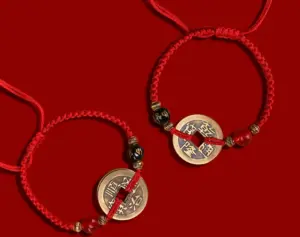
Why It Still Matters in a Digital Age
A smartwatch tells you your heart rate. A red string bracelet reminds you that you have a heart at all — that you’re connected to people who care about you, that you’re part of a story that started long before you.
It’s also one of the few traditions that doesn’t require belief to work. You don’t have to be Buddhist, Jewish, or Chinese to wear a red string with meaning. You just have to know what you’re tying it for.
How to Choose and Wear Your Red String
Don’t buy it for yourself. The red string has more power when given. Have someone who cares about you tie it on.
Set your intention before tying. Know what you’re asking for before the knot is tied.
Don’t obsess over the “right” tradition. If you want three knots with Chinese intentions on your left wrist with Kabbalistic meaning, that’s your practice. Traditions evolve.
Let it fall off naturally. When the string breaks, thank it and let it go. If you want, tie a new one.
A red string bracelet costs almost nothing. A piece of thread, a knot, a moment of intention. People have been wearing them for thousands of years. The string is cheap. The meaning is priceless.
—
**Sources:**
1. [Wikipedia – Red String (Kabbalah)](https://en.wikipedia.org/wiki/Red_string_(Kabbalah)): Cultural and spiritual origins
2. [Wikipedia – Red String of Fate](https://en.wikipedia.org/wiki/Red_thread_of_fate): East Asian legend
3. [GIA – Jade Description](https://www.gia.edu/jade): Gemological Institute of America reference
4. [British Museum – Chinese Jade](https://www.britishmuseum.org/collection/chinese-jade): Historical artifacts collection
—
✨ Discover jewelry with meaning at Blessglow
Browse our handcrafted gemstone bracelets — each piece selected for quality and meaning. Free shipping on orders over $99.