The Museum Is Open Today 10 Am - 5 Pm
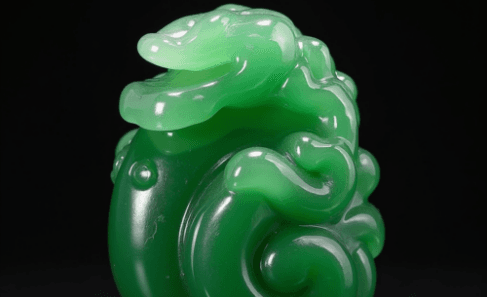
Gold is valuable because it’s rare. Diamonds are valuable because someone decided they should be. But jade is valuable for a different reason entirely. Jade has been continuously treasured longer than any other material on earth. And the reason isn’t scarcity or marketing — it’s meaning.
Quick Answers
Why is jade so important in Chinese culture?
Jade has been treasured for over 8,000 years — longer than any other gemstone. It symbolizes virtue, purity, and the Confucian ideals of wisdom, justice, and courage.
What is the difference between jadeite and nephrite?
Jadeite is rarer and comes in more colors (including imperial green). Nephrite is more common, typically darker green or white. Both are considered true jade.
Is jade good for everyday wear?
Yes — jade ranks 6-7 on the Mohs scale, making it durable enough for daily wear. However, avoid harsh impacts and never use ultrasonic cleaners.
The Oldest Continuous Material Culture
The pyramids of Giza were built around 4,500 years ago. The Colosseum in Rome is about 2,000 years old. The earliest known jade objects from China’s Xinglongwa culture date back 8,000 years.
That’s not a typo. Eight thousand years of continuous jade culture. Before bronze was smelted, before iron was forged, before written language was standardized, Chinese artisans were carving jade. And they never stopped.
The Liangzhu culture (3,300-2,300 BCE) produced jade works of such precision that modern researchers still can’t fully explain how they were made. Their jade discs (bi) and tubes (cong) have concentric circles so perfectly aligned that modern tools struggle to replicate them.
The earliest jade objects weren’t jewelry — they were ritual tools. Jade connected the human world to the spirit world.
Confucius on Jade: The Eleven Virtues
Confucius (551-479 BCE) wrote that jade possessed eleven virtues, each corresponding to a quality of the noble person:
Benevolence: Jade is warm and gentle to the touch, like kindness.
Wisdom: Its surface is clear and reflective, revealing truth.
Righteousness: Its edges are sharp but do not cut.
Propriety: It hangs straight and true, never crooked.
Music: When struck, it produces a clear, lingering tone.
Loyalty: Its flaws do not hide; they show openly.
Faith: The brighter it is polished, the brighter it becomes.
Heaven: It comes from the earth but reaches toward spirit.
Earth: It is born from mountains and rivers.
Virtue: It represents the path of the sage.
Truth: The Way itself is carved into its surface.
For 2,500 years, Chinese scholars memorized this passage. Wearing jade wasn’t decoration — it was a constant reminder of the person you aspired to be.
Jadeite vs Nephrite: What Most People Get Wrong
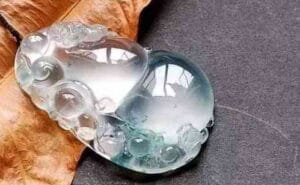
There are two completely different minerals called “jade.”
Nephrite: The original jade. Composed of actinolite and tremolite, formed under intense heat and pressure. Tougher than steel by some measures. Chinese emperors used nephrite for 8,000 years.
Jadeite: A different mineral (pyroxene). Slightly harder, wider color range, including the prized “imperial green.” Unknown to the Chinese until the 18th century when trade routes opened with Burma.
Top-grade jadeite (imperial green, translucent, flawless) is among the most expensive gemstones in the world. But mid-grade nephrite is more affordable and carries the same cultural meaning. In almost all Chinese lucky jewelry, you’re looking at nephrite — and that’s the jade with 8,000 years of tradition.
The Colors of Jade
Green: The classic. Harmony, balance, renewal. The most versatile and widely worn.
White: Purest form. Clarity, truth, spiritual connection. Often carved into guanyin figures.
Yellow: Rare. Earthly power, authority. Yellow was the imperial color.
Black: Protective and grounding. Absorbs negative energy. Often carved into Pixiu figures.
Red: Rarest natural jade color. Vitality, passion, life force.
Lavender: Unique to jadeite. Soft, feminine energy. Healing and emotional balance.
How to Tell Real Jade From Fake
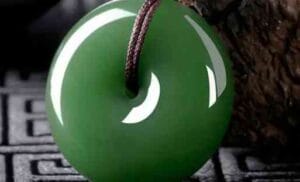
The Weight Test. Real jade is dense. It should feel heavier than it looks. If it feels light, it’s likely resin or glass.
The Sound Test. Tap two pieces together. Real jade makes a clear, bell-like ring that lasts. Fake jade makes a dull thud.
The Touch Test. Hold it against your cheek — real jade stays cool for a few seconds, then gradually warms. Plastic warms instantly.
Why I Still Wear Jade
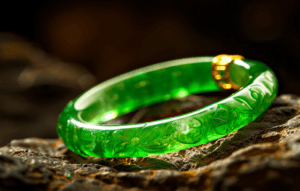
I’ve been wearing a green jade bangle for about six months. I wasn’t sure I believed in anything when I put it on. But there’s something about carrying the weight of 8,000 years of tradition on your wrist that changes how you move through the world.
When things get stressful, I touch it. When I’m making a decision, I turn it. When I need to remember I’m connected to something bigger than my immediate problems, I press it against my skin and feel how long it takes to warm up.
That’s the jade tradition. Not superstition. Just a physical anchor for the things that matter. Worn by humans since before we had writing. Still being worn today. Some traditions last because they’re true.
✨ Discover jewelry with meaning at Blessglow
Browse our handcrafted gemstone bracelets — each piece selected for quality and meaning. Free shipping on orders over $99.