The Museum Is Open Today 10 Am - 5 Pm
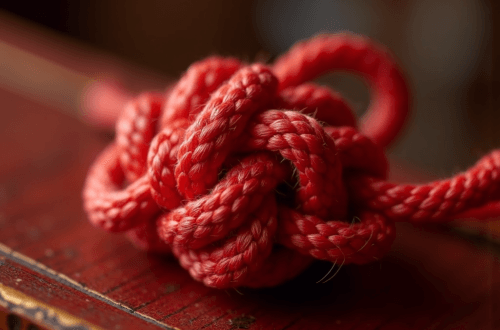
You see them everywhere — celebrities, yoga teachers, your friend who’s “not really into that stuff.” The red string bracelet has become a popular accessory. But its roots go much deeper than fashion.
Quick Answers
Why do people wear red string bracelets?
In Chinese tradition, the red string represents fate, protection, and the invisible bond between soulmates. It's believed to ward off evil and attract good fortune.
Which wrist should I wear a red string bracelet on?
The left wrist (receiving side) is traditional for attracting good luck and love. The right wrist (giving side) is for projecting protection outward.
What happens when a red string bracelet breaks?
It's believed the string has absorbed negative energy meant for you. Thank it, bury it, and replace it with a new one. Letting it go is part of the tradition.
The Oldest Legend: The Old Man Under the Moon
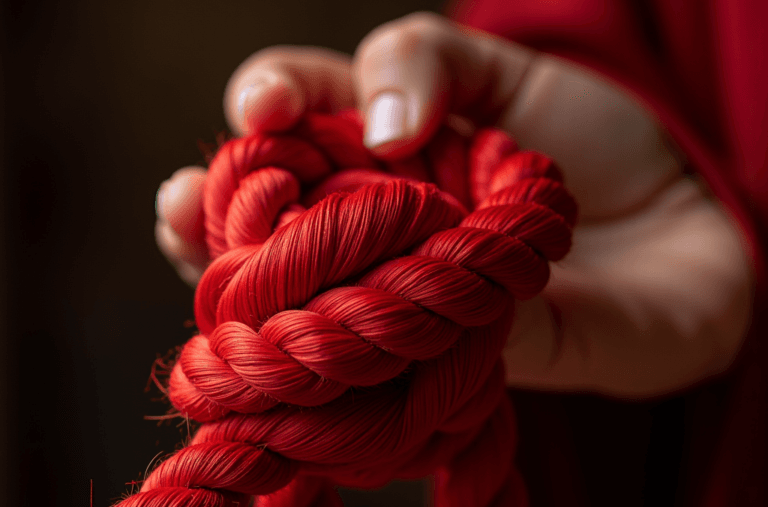
The most famous Chinese legend about the red string involves Yue Lao, the god of marriage and fate. According to the legend, every person is born with an invisible red thread tied to their ankle. The other end is tied to the person they are destined to be with. The thread may stretch, tangle, or get buried — but it will never break.
The legend appears in many Chinese literary works, most famously in “The Knotted Threads” from the Tang Dynasty. A young man named Wei Gu sees the old man on the streets one night. Wei Gu asks who he’s destined to marry. The old man points to a three-year-old girl in the market. Wei Gu, offended his destined wife is a commoner, sends a servant to kill the girl. The servant only wounds her above the eyebrow.
Fourteen years later, Wei Gu marries a beautiful woman. On their wedding night, he notices a scar above her eyebrow. She tells him she was attacked by a stranger when she was three. The red thread could not be cut, not even by murder.
The Historical Record
Zhou Dynasty (1046-256 BCE): Red silk cords bound the hands of bride and groom in marriage ceremonies — the earliest documented use of red string in Chinese ritual.
Han Dynasty (206 BCE-220 CE): Red strings were tied around the wrists of newborns to protect them from evil spirits. The practice was called “life-tying cord” and worn until the child’s first birthday.
Tang Dynasty (618-907 CE): The red string spread into Buddhist and Daoist practice. Monasteries began blessing and distributing red strings to pilgrims. The three-knot tradition was first documented here.
Song Dynasty (960-1279 CE): The practice expanded to include prosperity. Merchants wore red string bracelets with coin charms for business luck. Scholars tied red strings around writing brushes for literary success.
The Three Knots: Meaning and Ritual
The traditional Chinese red string bracelet has three knots, each with specific meaning:
Knot 1 (Heaven): Represents divine timing, fate, cosmic support. The wish here is for blessings from above.
Knot 2 (Earth): Represents stability, grounding, material well-being. The wish for physical needs: health, home, daily life.
Knot 3 (Humanity): Represents relationships, community, personal growth. The wish for connection and purpose.
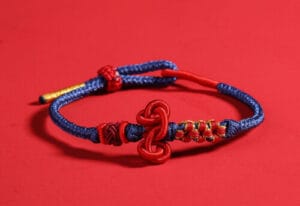
The tying ritual:
1. Choose your timing. Sunrise is most auspicious. New moon and full moon are also powerful.
2. Clean the space. Wash the bracelet and your hands.
3. Hold the string around your left wrist. Close your eyes.
4. State three wishes — one for each knot.
5. Have someone else tie the knots if possible. Each knot gets one wish.
6. Tuck the ends into the knots. Cutting the string is considered bad luck.
When It Falls Off
A red string is not meant to last forever. The fibers wear down over three to six months of daily wear.
When the string breaks and falls off, it’s said to have completed its purpose. The knots have absorbed the energy, the wishes have been sent. Some traditions say the bracelet took on harm meant for you.
What to do: Don’t save it. Thank it. Dispose of it by burning (respectfully) or burying. Wait before retying — some recommend 49 days, but I’d say wait until you have new wishes.
Common Questions
Can I wear it in the shower? Traditionally, remove it before bathing. Water washes away accumulated intention.
Can I wear more than one? Yes, but each should represent distinct wishes — one for career, one for family, one for health.
Does material matter? Natural fibers (cotton, silk, hemp) carry intention better than synthetics.
Can I make my own? Absolutely. Making your own is more powerful than buying one — every knot carries your personal intention.
The Tradition Continues
When you wear a red string bracelet, you’re participating in a tradition spanning 3,000 years and millions of individual stories. Every bracelet ever tied has carried a wish — for love, protection, prosperity, connection. Your bracelet is part of that chain now.
What do you want it to carry?
✨ Discover jewelry with meaning at Blessglow
Browse our handcrafted gemstone bracelets — each piece selected for quality and meaning. Free shipping on orders over $99.